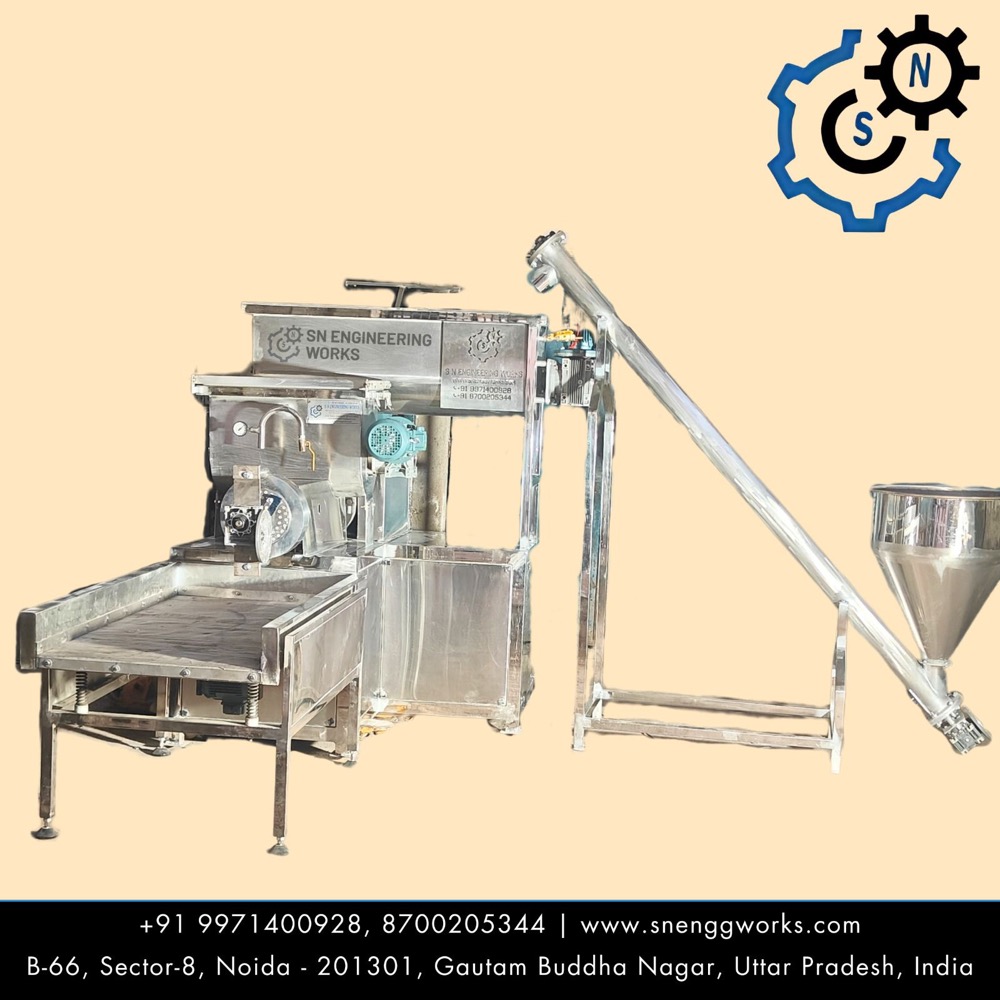
Choosing the right pasta plant manufacturer is an important decision for any food business planning to start or expand pasta production. The right machinery can affect production consistency, product quality, operating efficiency, maintenance requirements, and future expansion. However, selecting a manufacturer should involve more than comparing machine prices.
A reliable supplier should understand your production requirements and help you choose suitable equipment for your product, capacity, available space, and level of automation. Before placing an order, it is useful to evaluate the machinery, technical specifications, customization options, installation support, and after-sales service offered by the manufacturer.
Understand Your Pasta Production Requirements First
Before contacting pasta making machine manufacturers, define what you actually need from the production setup. A machine that works well for one business may not be suitable for another.
Start by considering the type of pasta you plan to manufacture. Different products can require different forming, extrusion, drying, and handling arrangements. Your expected production volume is another important factor. A small commercial operation may have different requirements from a large-scale industrial production unit.
You should also consider:
- Expected production capacity
- Type and shape of pasta
- Required level of automation
- Available production space
- Electrical requirements
- Drying requirements
- Material and construction of machinery
- Future production expansion
- Operator requirements
- Installation and technical support
Having these details ready makes it easier to discuss your project with a manufacturer and compare different machinery options.
A good manufacturer should not simply recommend the biggest machine available. Instead, the equipment should match your actual production objectives and operating conditions.
Check the Manufacturer's Pasta Machinery Range
A dependable pasta plant manufacturer should have a clear understanding of the different stages involved in pasta production and offer machinery appropriate to the required process.
Depending on the production setup, a pasta processing system may involve equipment such as pasta making machines, extruders, macaroni equipment, and drying systems.
For example, an industrial pasta machinery range can include:
- Industrial pasta making machines
- Automatic pasta machines
- Pasta extruder machines
- Macaroni making machines
- Stainless steel pasta equipment
- Pasta drying equipment
- Integrated pasta processing solutions
The important point is not simply how many products a company lists on its website. You should understand whether the manufacturer can recommend a suitable combination of equipment for your intended production process.
SN Engineering Works, for example, lists industrial pasta machines, macaroni equipment, pasta extruders and related processing solutions as part of its product range. Its website also states that machinery can be customized according to production requirements.
Compare Capacity With Your Actual Production Goals
Machine capacity is one of the most important factors to evaluate before purchasing pasta processing machinery.
A common mistake is choosing equipment only because it has a higher stated capacity. Higher capacity does not automatically mean better value if your current production requirements are much lower.
Instead, discuss your expected output with the manufacturer. Ask how the stated capacity relates to your intended product and production conditions.
You should clarify:
- Expected output per hour
- Product type used for the capacity calculation
- Operating conditions
- Power requirements
- Number of operators required
- Continuous or batch operation
- Scope for future expansion
For example, SN Engineering Works currently lists different pasta machines with different specifications and capacities, including macaroni machinery and industrial pasta equipment. This demonstrates why buyers should compare individual machine specifications rather than treating every pasta machine as the same type of equipment.
The correct machine is the one that fits your production plan, not necessarily the machine with the largest number in its specification sheet.
Evaluate Machine Construction and Material Quality
The construction of food processing equipment matters because pasta production involves regular operation, cleaning, handling, and maintenance.
When evaluating a pasta making machine manufacturer, ask what materials are used for the machine's major components and product-contact areas. Stainless steel construction is commonly important for food-processing applications because it can support hygiene, durability, and easier cleaning when properly designed and maintained.
Do not evaluate construction only by looking at photographs. Ask for detailed specifications and clarify which parts are made from stainless steel and which components may use other materials.
You can also ask the manufacturer about:
- Product-contact materials
- Frame construction
- Motor and drive components
- Electrical controls
- Safety arrangements
- Cleaning access
- Maintenance access
- Replacement parts
A transparent manufacturer should be able to explain the important components of the machine and their role in the production process.
Look at Customization and Plant Requirements
Every pasta production business may have different requirements. Production volume, available space, product range, workflow, and automation preferences can all influence the machinery configuration.
This is why customization can be an important consideration when choosing a pasta plant manufacturer.
Instead of asking only, “What is the price of your pasta machine?”, discuss your complete requirement.
Share information such as:
- Available floor area
- Desired production capacity
- Pasta varieties
- Automation expectations
- Existing machinery
- Electrical availability
- Drying requirements
- Future expansion plans
The manufacturer can then determine whether a standard machine or a more customized setup would be appropriate.
SN Engineering WorksSN Engineering Works states that its machinery can be customized according to product type, production volume, and space availability.
This type of discussion can help reduce the risk of purchasing equipment that does not fit your production layout or business plans.
Ask About Installation, Training and After-Sales Support
Buying the machine is only one part of setting up a production operation. Installation, operator training, troubleshooting, and maintenance can also affect the long-term experience with the equipment.
Before ordering, ask the manufacturer what support is included.
Important questions include:
- Is installation provided?
- Is operator training available?
- What technical support is offered after installation?
- How can spare parts be obtained?
- What maintenance support is available?
- What is covered under the warranty?
- How can technical issues be reported?
A manufacturer that provides clear answers before the purchase can make the commissioning process easier to plan.
SN Engineering Works states on its website that it provides installation, operator training, technical guidance, and after-sales support for its machinery.
However, buyers should always ask for the exact scope of support, warranty terms, and service conditions applicable to their particular machine before finalizing an order.
Compare Manufacturers on More Than Price
Price is naturally important when purchasing industrial machinery, but it should not be the only deciding factor.
Two machines with similar-looking specifications may differ in construction, controls, components, support, customization, and long-term maintenance requirements.
When comparing pasta making machine manufacturerss, create a simple comparison covering:
| Factor | What to Check |
|---|---|
| Machine capacity | Does it match your production target? |
| Construction | What materials and components are used? |
| Automation | What operations are automated? |
| Product compatibility | Is the machine suitable for your pasta type? |
| Customization | Can the configuration be adapted? |
| Installation | Is commissioning support available? |
| Training | Will operators receive proper guidance? |
| Warranty | What exactly is covered? |
| Spare parts | How easily can replacement parts be obtained? |
| After-sales service | What technical support is available? |
This approach gives you a better basis for comparing suppliers than simply selecting the lowest quotation.
Why Technical Discussion Matters Before Ordering
A detailed technical discussion can prevent misunderstandings later.
Before placing an order, ask the manufacturer to clearly explain the production process and equipment included in the proposed setup. If you require an industrial pasta making machine, confirm whether the quotation includes only the main machine or additional equipment required for your production process.
Also clarify what is included and what must be arranged separately.
For example, ask about:
- Main processing equipment
- Extrusion equipment
- Dies or forming components
- Drying equipment
- Conveyors
- Electrical panels
- Installation
- Commissioning
- Training
- Packaging integration, if required
The exact requirements will depend on the product and plant design. A professional discussion at this stage can help you understand the complete scope before making an investment.
Why Noida-Based Manufacturers Can Be Relevant for Buyers in India
Noida is an established industrial area in the Delhi-NCR region, and the area has businesses involved in engineering and machinery manufacturing.
For buyers looking for a pasta plant manufacturer in India, location can be one practical consideration when evaluating suppliers. However, location alone should not determine your decision.
Instead, consider the manufacturer's actual machinery range, technical capability, communication, service arrangements, and ability to understand your production requirements.
SN Engineering Works lists its office address in Sector 8, Noida, Uttar Pradesh, and identifies itself as a food processing machinery manufacturer established in 2012.
For buyers considering a supplier from Noida or elsewhere in India, the same evaluation process should apply: verify the machinery specifications, discuss the application, and confirm commercial and technical terms before ordering. About SN Engineering Works
Questions to Ask Before Choosing a Pasta Plant Manufacturer
Before finalizing your supplier, ask these questions:
-
Which machine is suitable for my required production capacity?
The manufacturer should recommend equipment based on your actual production requirements rather than simply offering the largest available machine.
-
Can the machinery be customized?
Ask whether the configuration can be adjusted for your product, production volume, layout, and automation requirements.
-
What is included with the machine?
Confirm the complete scope of supply, including accessories, electrical systems, dies, installation, and other relevant components.
-
Do you provide installation and operator training?
Clarify how commissioning and training will be handled.
-
What after-sales support is available?
Ask about technical assistance, spare parts, maintenance, and service response.
-
What warranty terms apply?
Get the warranty coverage and exclusions in writing before placing the order.
-
Can I discuss my production requirements before receiving a quotation?
A technical consultation can help ensure that the proposed equipment actually matches your application.
Final Checklist Before Selecting Your Supplier
Before making the final decision, review your shortlisted manufacturer against the following checklist:
- Does the manufacturer understand your product?
- Is the machine capacity suitable for your business?
- Are the specifications clearly provided?
- Is the equipment appropriate for your production process?
- Are customization options available where required?
- Is installation support available?
- Is operator training provided?
- Are warranty conditions clearly explained?
- Is after-sales service available?
- Can spare parts and technical assistance be obtained?
- Does the quotation clearly define what is included?
- Have you discussed your future production requirements?
A manufacturer that can provide clear answers to these questions is easier to evaluate and can help you make a more informed machinery investment.
Conclusion
Choosing the right pasta plant manufacturer requires more than comparing prices or selecting a machine based on capacity alone. Your production requirements, pasta type, machine construction, automation level, customization, installation, training, warranty, and after-sales support should all be considered before making a decision.
The best approach is to first define your production goals and then discuss those requirements with manufacturers that have relevant pasta processing machinery. Compare technical specifications and service terms carefully, and make sure the complete scope of supply is clear before placing an order.
SN Engineering Works provides industrial pasta machinery including pasta making machines, pasta extruders and macaroni making equipment, along with technical support and customization options. Businesses planning a pasta production setup can discuss their requirements with the team to determine a suitable machinery solution.
If you are planning a new pasta production unit or upgrading an existing setup, review your requirements first and request a detailed technical discussion before making the final machinery decision. Contact SN Engineering Works